Navisight connects your company data, external intelligence and human judgment to identify risk, understand business impact and coordinate action across your supply chain.
Start with the pain point that matters most. Activate the intelligence you need. Expand over time.
Works with your existing ERP, planning, procurement, TMS, WMS, QMS, CRM, finance and communication systems.
| Enterprise systems | The gap | Navisight |
|---|---|---|
| Record transactions | Information remains fragmented | Connects context across functions |
| Run approved workflows | Exceptions are interpreted manually | Explains root cause and impact |
| Store plans and master data | Decisions happen in meetings and email | Recommends and coordinates action |
| Maintain official records | Human judgment is rarely captured | Retains decisions, evidence and outcomes |
Your existing systems record different parts of the operation. Navisight connects the complete decision.
It detects risk early, understands the impact, recommends the options and coordinates the approved action. Then it learns from every outcome. Your systems stay the systems of record.




Choose the problem you recognise. Navisight shows which of the 25 connected intelligence capabilities resolve it, across 5 groups of one Supply Chain Brain. Activate the intelligence you need. Expand over time.
The S&OP plan changes. The Brain resolves which suppliers, capacity and stock positions the change touches and coordinates the follow-through with the owners of each.
4 connected intelligence capabilities
Demand moves away from the forecast. The Brain shows where stock will run short or pile up, and what to bring forward, hold or cancel before either happens.
4 connected intelligence capabilities
A critical item's on-time-in-full slips. The Brain traces it to the factory and item behind it, shows the orders and customers exposed, and coordinates the corrective action.
3 connected intelligence capabilities
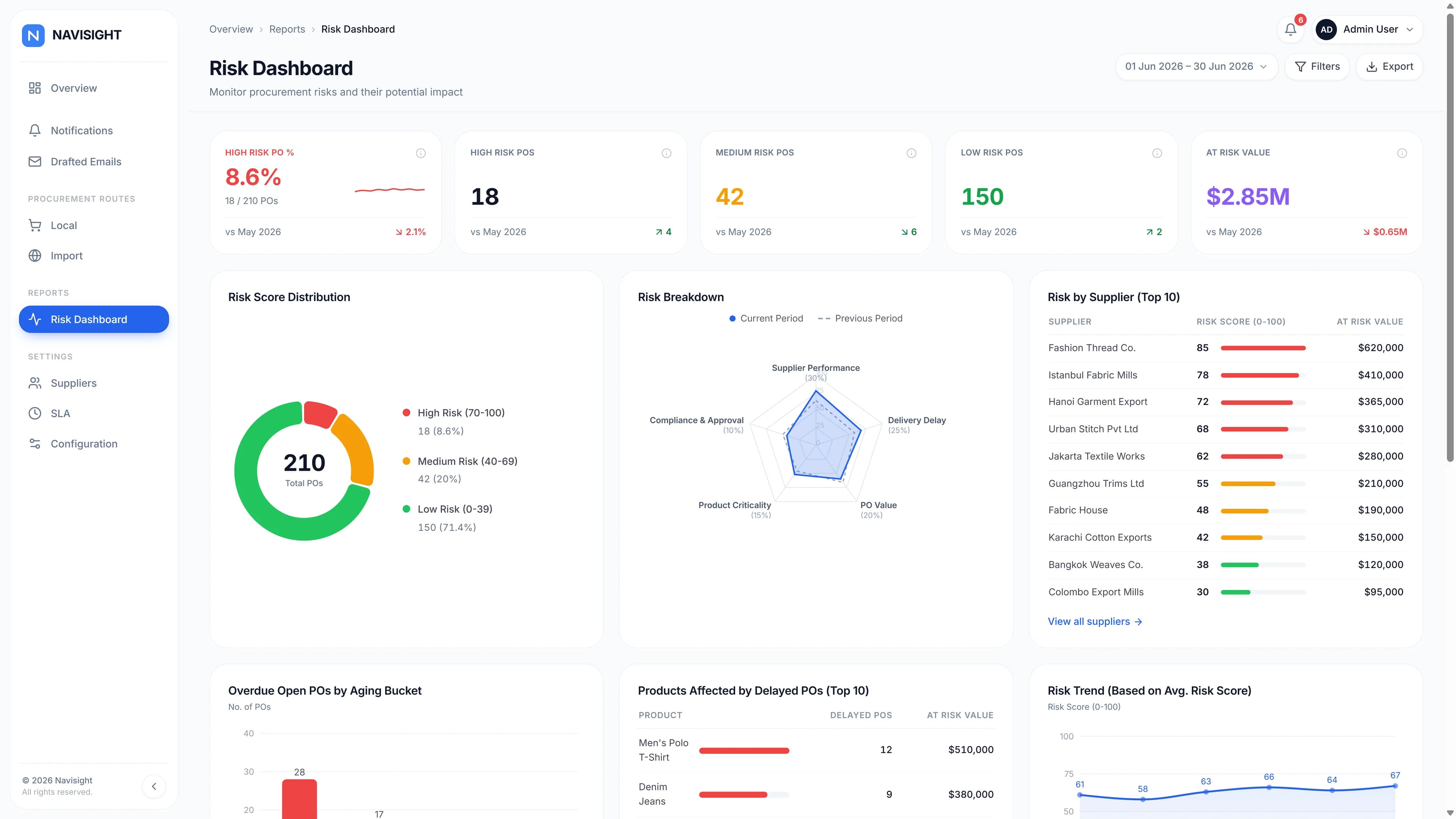
A disruption hits an approved factory. The Brain works out the exact exposure by item, order and customer, and compares mitigation options with the residual risk of each.
4 connected intelligence capabilities
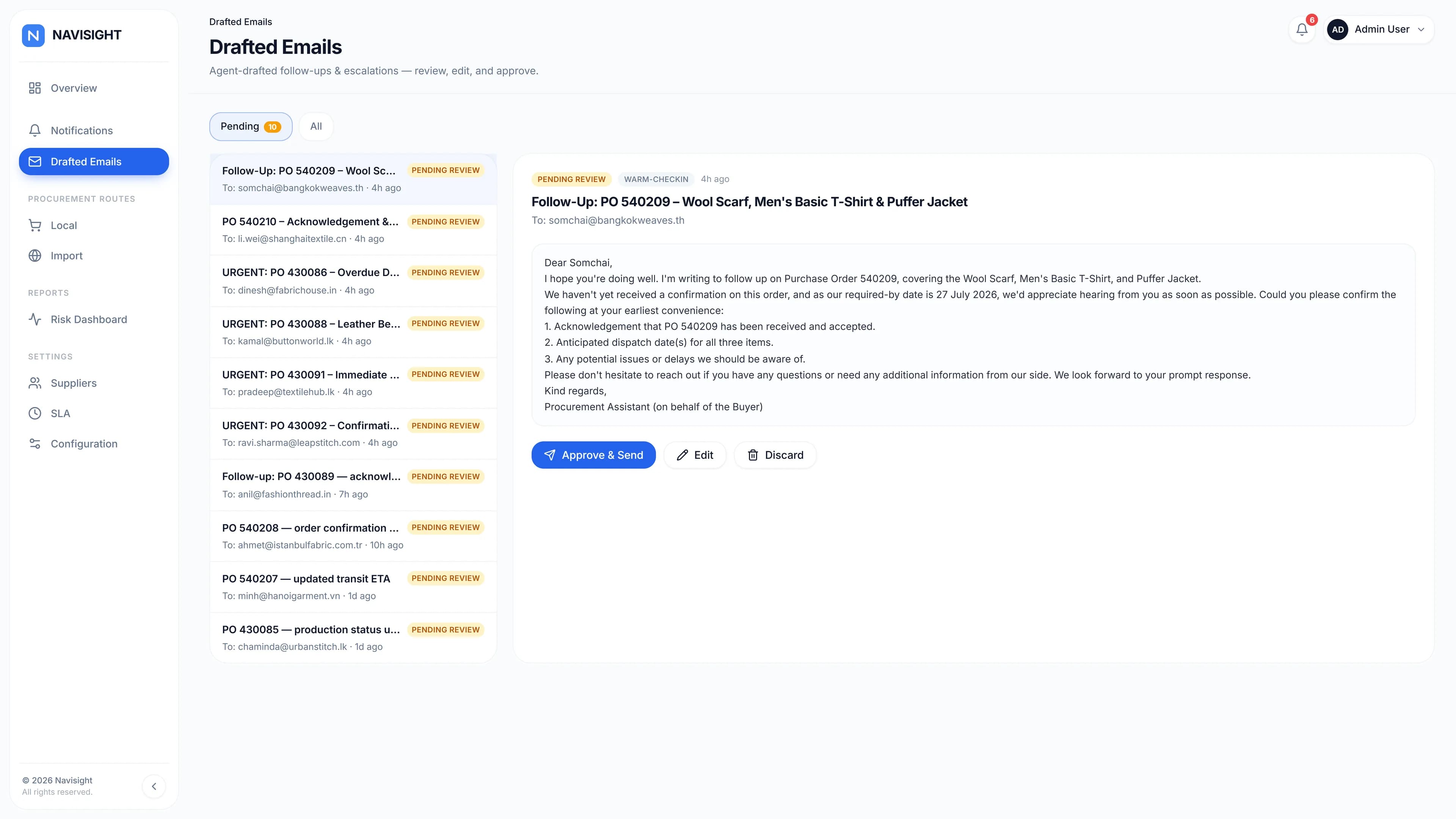
A supplier goes quiet on an open order. The Brain follows up, escalates when the SLA is breached, and flags the delivery risk to the people who need to decide.
3 connected intelligence capabilities
A supplier's pricing, lead time or service terms drift from what was agreed. The Brain checks orders and invoices against the contract and raises the difference with its owner.
4 connected intelligence capabilities
Stock sits in one location while orders wait at another. The Brain sees both, proposes the transfer or re-allocation, and coordinates it once approved.
4 connected intelligence capabilities
Demand falls and stock becomes excess. The Brain shows the root cause, the contractual obligations still in play, and the recovery options for approval.
4 connected intelligence capabilities
Inbound arrivals exceed capacity. The Brain shows the zone pressure, sequences receipts, and proposes cross-dock or overflow before the dock backs up.
3 connected intelligence capabilities
Port congestion threatens supply. The Brain lists the affected items and orders, the decision deadline, and the route options with their cost and service impact.
3 connected intelligence capabilities
A customer appointment will be missed. The Brain connects route, stock and customer, and coordinates the service recovery with the owners of each.
4 connected intelligence capabilities
An invoice is blocked. The Brain lines up the purchase order, the receipt and the invoice, shows the discrepancy and who owns it, and drafts the query.
3 connected intelligence capabilities
A freight bill does not match the contracted rate. The Brain audits it line by line, prepares the claim, and tracks it to closure.
3 connected intelligence capabilities
An import licence or document is missing. The Brain shows what is required, how ready the shipment is, and coordinates the fix with supplier, broker and buyer.
3 connected intelligence capabilities
14 pain points, 25 capabilities, one Brain. No capability is a separate purchase; each is activated inside the same knowledge graph.
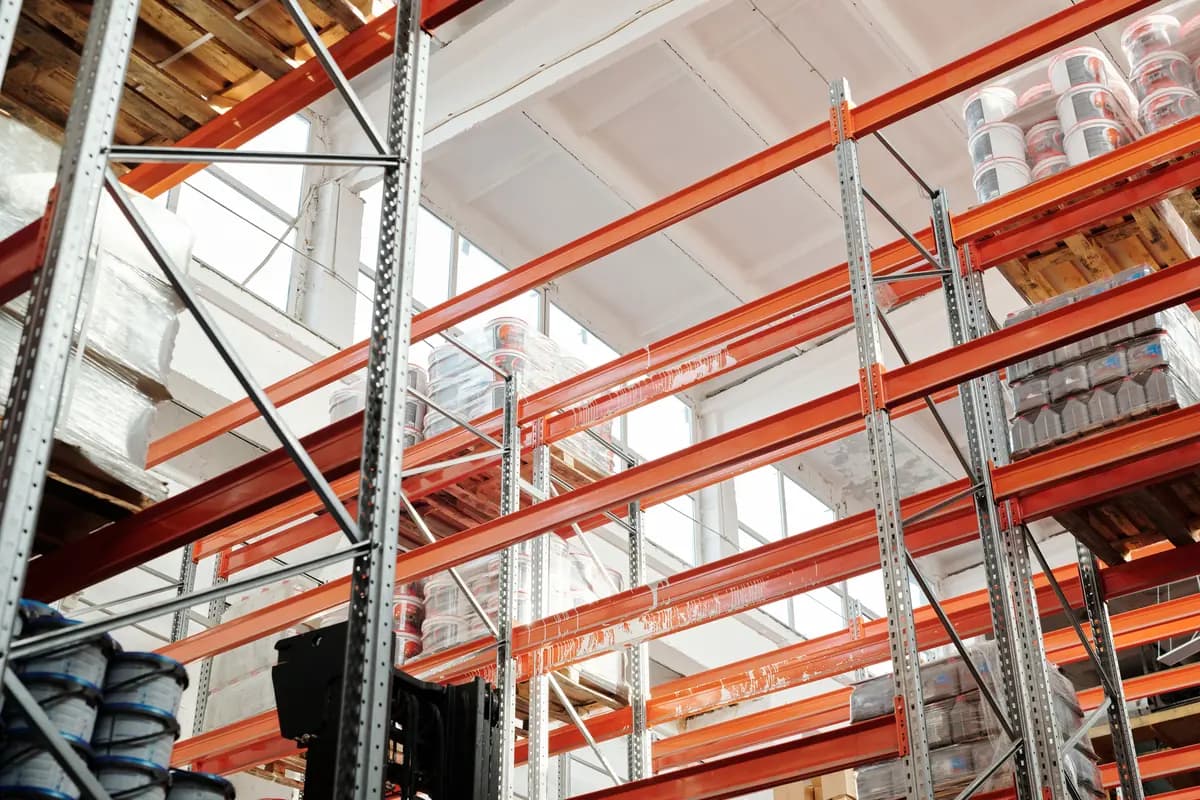
From manufacturers and distributors to hospitals, banks, hotels and infrastructure operators, every organization depends on suppliers, contracts, capacity and operational fulfilment.
 01 / 06
 02 / 06
 03 / 06
 04 / 06
 05 / 06
 06 / 06
Do not see your industry? Navisight is configured around your supply-chain and supplier-management problem, not restricted by an industry template.
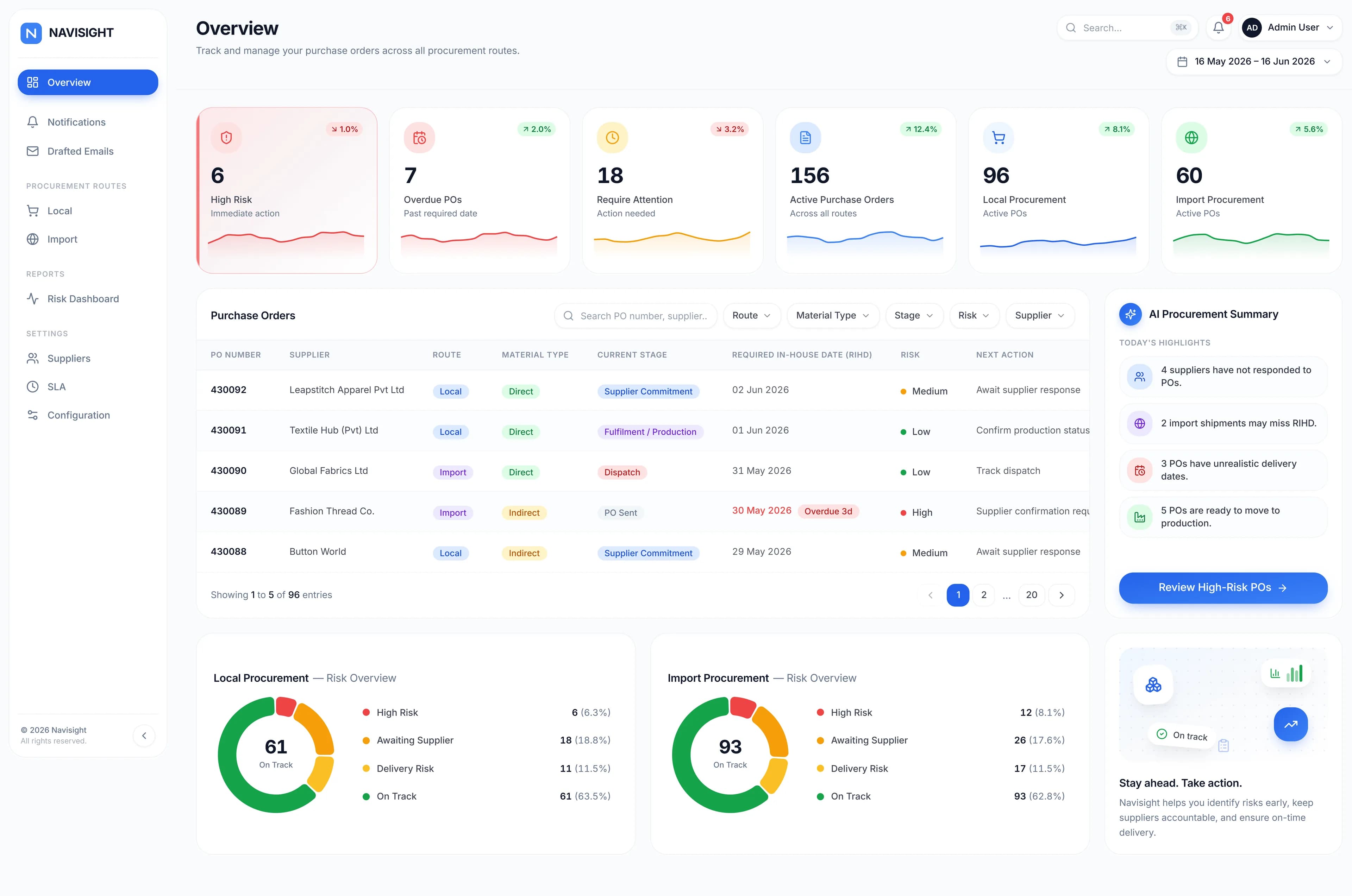
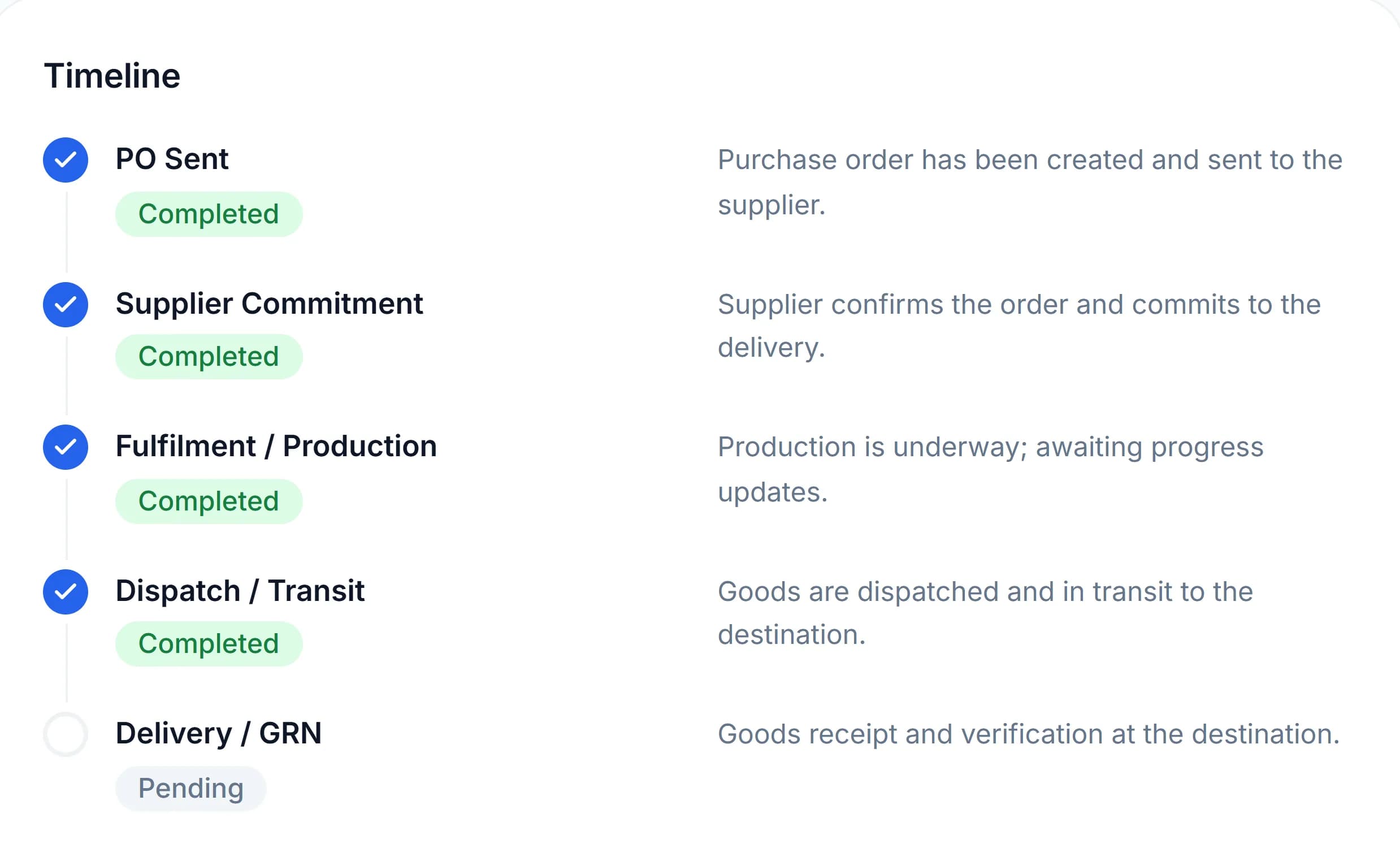
One of the 25 connected intelligence capabilities, and the one customers run first most often. Navisight follows up with suppliers, tracks each order through five stages and raises execution risk before the date is missed.
The purchase order is created and sent to the supplier.
The supplier confirms the order and commits to the delivery.
Production is underway; progress is tracked until goods are ready.
Goods are dispatched and in transit to the destination.
Goods receipt, cross-checked against your ERP GRN.
An intelligence and coordination layer that connects your company data, external signals and human judgment to identify risk, explain its impact, recommend options and coordinate approved action.
It is not an analytics dashboard. It interprets events, explains causes, compares options and coordinates the response, while material commitments stay under human control. You start with the pain point creating the greatest impact, activate only the connected intelligence capabilities it needs, and expand later on the same Brain, data relationships and governance model.
No. Your ERP, APS, WMS, TMS, QMS and procurement platforms remain the systems of record. They continue to plan, transact and record; Navisight connects their information and adds cross-functional intelligence and coordination above and across them.
You do not need full integration to begin. A defined scope can start with controlled uploads, documents and communication, then deepen integration as you expand.
Navisight is not a general-purpose chatbot. It develops governed organizational context by connecting your company data, external intelligence and approved human judgment. That lets it understand your suppliers, materials, services, contracts, workflows and decision rights, and use that context continuously to identify risk and coordinate action.
When it is uncertain, it shows its confidence, assumptions, missing information and evidence, then asks for clarification or human review. Navisight is provided under an enterprise agreement with defined data-security, confidentiality and access-control requirements.
Yes. Navisight follows industry-standard security practices. Your data is encrypted in transit and at rest, external information comes only from approved sources, and the service is provided under an enterprise agreement with defined data-security, confidentiality and access-control requirements. Details are available on request.
Navisight pricing is custom to each operation and shared after a short demo, since deployment scope varies by the number of suppliers, carriers and systems connected. Book a demo at navisight.ai to get pricing specific to your operation.
Book a demo at navisight.ai. A member of the team will walk through your current systems and show how Navisight would run against your actual supplier, carrier and contract data.
Tell us the supply chain problem creating the greatest operational or financial impact. A typical initial implementation takes one to two months from the first structured discovery interaction, depending on scope, workflow complexity, data readiness and integration requirements.
Tell us the problem creating the greatest operational or financial impact. We will show how Navisight can build the intelligence and coordination layer around it.